
APM improves maintenance. AIM confirms safety. Neither connects operating decisions to structural response in real time. That gap has a name.


APM and AIM have delivered real gains. Maintenance is tighter. Inspection is smarter. Reliability has improved.
And yet the ceiling holds. Throughput stays flat. Asset life is managed by assumption. CAPEX arrives on schedule rather than on evidence. The plant appears to have reached its practical limit.
It hasn’t. It has reached the limit of what those programs were designed to see.
The gap has a name: Structural Performance Management (SPM) – the operating layer that continuously calculates the real structural limits of critical equipment from operating data, so operators can safely increase throughput, reduce downtime, and extend asset life. At Pearl GTL, a WEF Lighthouse site, SPM contributed to six additional years of critical asset life and a 64% reduction in annualised CAPEX.
The constraint is not the asset. It is the visibility into how it responds.
What APM and AIM were each designed to do
Asset Performance Management (APM) was built to answer one question: When will something break? The focus of APM has been to incorporate real-time data and analytics into asset maintenance work processes and systems.
As Peter Reynolds of Operational IT Research Group notes in his white paper on APM and Structural Performance Management, APM cannot provide real-time insights and an approach to physics-based structural asset integrity with a deep understanding of structural equipment health. For asset-intensive industries, structural integrity management systems need to be part of the picture.
Asset Integrity Management (AIM) was built to answer a different question: Is this asset safe to operate? It manages degradation – corrosion, fatigue, cracking – through risk-based inspection (RBI) strategy and engineering assessment. It protects assets and confirms regulatory compliance.
Both programs deliver real value. Neither was designed to answer the question that shapes the performance ceiling: How is this asset actually responding, structurally, to how we are running it right now?
APM addresses maintenance. AIM addresses compliance. The question of structural response – how stress accumulates, how fatigue progresses, how operating decisions translate into structural behaviour – sits between them. Unanswered.
Read more: Why Asset Performance Management Isn’t Delivering the Gains Operators Expect
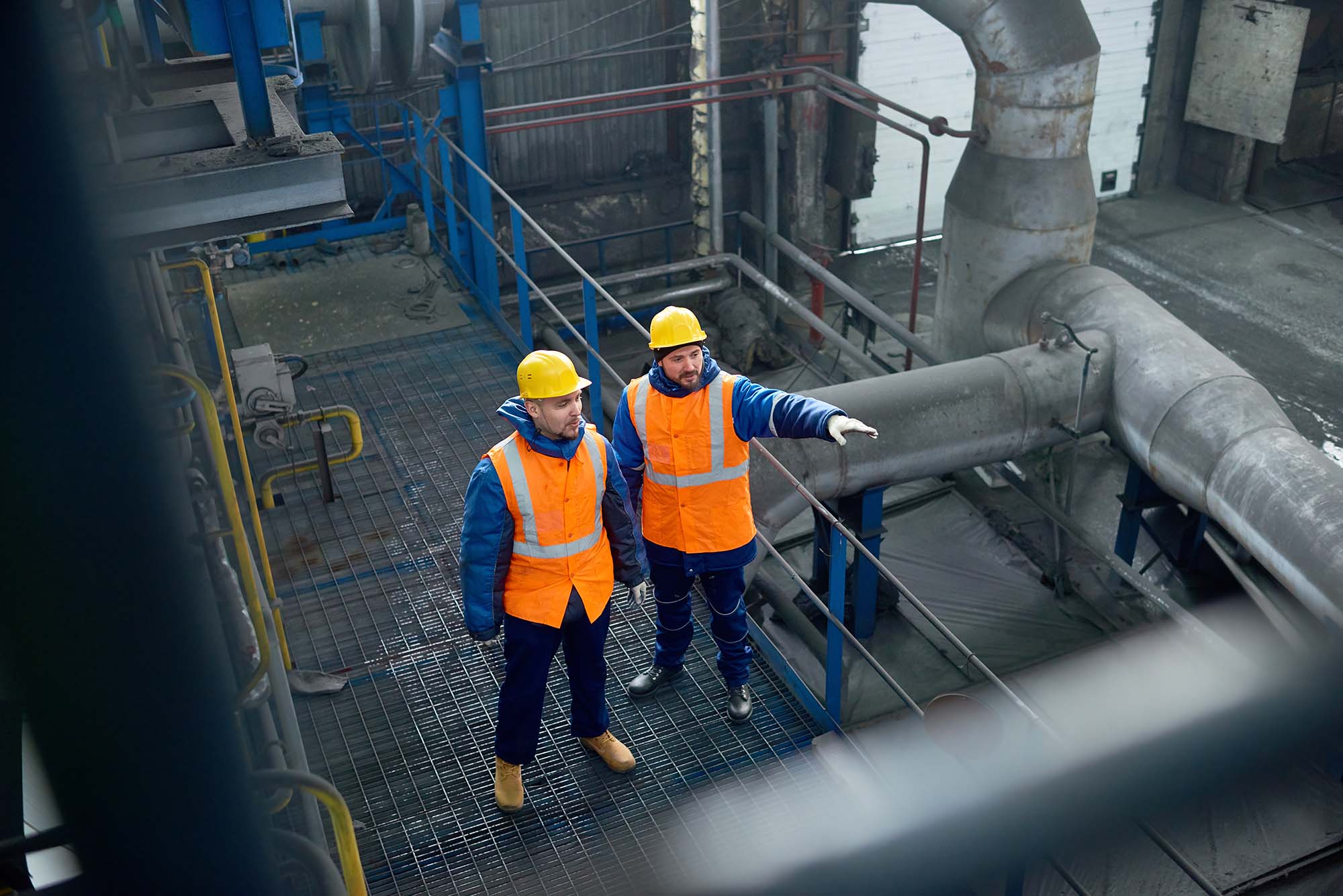
The structural blind spot – What neither program was designed to see
Operators have strong visibility into process conditions: temperature, pressure, flow rates, operating cycles.
What is far harder to see is how those conditions affect the asset itself — the stress accumulating in the steel, fatigue progressing through thousands of cycles, creep building in high-temperature equipment like SMRs and reformer tubes.
These mechanisms develop internally, over time, in the space between inspection intervals.
This is not a data collection problem. It is a visibility problem. And it shapes every operating decision made on that asset — often without those making the decisions realizing it.
The consequences are consistent across plant types:
- Safety margins stay conservative because the true structural limits are unknown
- Unplanned downtime occurs when degradation is only visible after the fact
- Operating envelopes are set against assumptions rather than observed behavior
- Capital is deployed on elapsed time rather than actual asset condition
- Opportunity decisions (pushing throughput, extending run length) are declined because no one can quickly assess the structural consequences
Explore more: The Limits of Asset Integrity Management in High-Intensity Operations
The constraint is not the asset. It is the lack of visibility into how the asset responds.
What Structural Performance Management is
Structural Performance Management (SPM) connects how assets are operated to how they actually behave – so operators can make better decisions on safety, throughput, asset life, and capital.
In operational terms, SPM:
- Translates process conditions – temperature, pressure, flow, operating cycles – into continuous structural response in real time
- Shows where the asset can safely carry more load and where operating changes introduce risk
- Identifies where asset life can be extended and where CAPEX can be deferred with confidence
- Makes structural behaviour a continuous management input, not a periodic engineering assessment
SPM is built on physics-based AI – the method that combines operating data with the governing science of structural behaviour. That method powers AI for Structural Integrity (AI4SI), the technology category recognised by the World Economic Forum as a Fourth Industrial Revolution technology. SPM is the management system that makes AI4SI actionable across operations, integrity, and capital decisions.
Physics-based AI is the method. AI4SI is the category. SPM is the system operators run.
SPM is not an extension of APM. It is not an upgrade to integrity management. It is the operating layer that sits above both – connecting structural response to the decisions that determine site performance.
How APM, AIM, and SPM compare

SPM is not a replacement for APM or AIM. The plant still needs maintenance scheduling. It still needs inspection strategy and fitness-for-service assessment. SPM provides what neither program was designed to provide: a continuous view of structural response that makes every downstream decision (operational, integrity, and capital) better informed.
What SPM makes possible: Results from live deployments
SPM is not theoretical. The results below come from live industrial deployments – not pilots.
At Pearl GTL in Qatar – a WEF Lighthouse site – SPM contributed to six additional years of critical asset life and a 64% reduction in annualised CAPEX. That is not a maintenance improvement. It is a capital decision made on structural evidence rather than elapsed time.
At Adriatic LNG, SPM enabled the re-rating of an open rack vaporiser from 78 to 90.1 bar – verified by Bureau Veritas Nexta and approved by the regulator to ASME VIII Div.2 Part 5. The achieved re-rating is an operational fact. Across all four ORVs at the terminal, the projected impact is approximately €16M per year in additional send-out revenue and €32M in deferred CAPEX. The mechanism: structural evidence replaced a conservative assumption that had been constraining throughput for years.
At Shell Bonga FPSO, connecting structural response to operational decisions contributed to approximately 33% OPEX reduction.
In each case the mechanism is the same. Visibility into structural behaviour changes what decisions become available – on throughput, on capital, on asset life. The asset did not change. The understanding of how it behaves did.
“The cheapest capacity is the one already inside the asset — visible only when structural behaviour is known.”
What changes when structural behaviour is visible
When structural behavior is invisible, conservatism fills the gap. Engineers manage against assumptions because they have no alternative. That conservatism is rational, but it carries a cost.
Performance headroom stays unrealised. Capital is deployed earlier than asset condition requires. Throughput targets are set against inherited limits rather than actual structural capacity. Run-length decisions are made by rule. Turnaround intervals are fixed by calendar rather than condition.
When structural behavior is visible, the question changes:
Instead of: Where is output being lost in the process?
Leaders can also ask:
- Which constraints are real and which are inherited from earlier assumptions?
- Which operating envelopes can be safely widened?
- Where can the next turnaround be deferred without adding structural risk?
- Which CAPEX decisions are driven by evidence, and which by elapsed time?
That shift changes how bottlenecks are identified, how run-length decisions are made, how capital is timed, and how risk and performance are discussed across functions – from the integrity team to the boardroom.
Key takeaways
- APM and AIM are well-established disciplines. Neither was designed to connect operating decisions to structural response. In real-time.
- The gap between what those systems see and what structural behavior requires is where performance headroom is lost and where unplanned downtime originates.
- SPM is the management layer that closes this gap: it makes structural behaviour a continuous, real-time input to operational and capital decisions.
- Results from live deployments (Pearl GTL, Adriatic LNG, Shell Bonga) show that structural visibility changes what decisions become available, not just what is known.
- The constraint is not the asset. It is the visibility into how it responds.
Thomas leads the company from inception to becoming a trusted partner for operators managing some of the world’s most complex assets. His work sits at the intersection of the Fourth Industrial Revolution, applying the right tools to the right problems, and driving disruptive innovation that strengthens real-world infrastructure.