
CERAWeek 2026 showed a clear shift in the energy industry’s priorities. The discussion has moved beyond broad digital transformation narratives and toward a more immediate operational reality: how to run critical infrastructure safely, reliably, and profitably in a world defined by uncertainty.
Across the week, three themes consistently surfaced. First, geopolitical volatility has pushed energy security and resilience back to the top of the agenda. Second, the AI conversation has matured, moving from general enthusiasm to a much more practical focus on real use cases and measurable outcomes. Third, operators are increasingly recognizing that the fastest path to value is not always new infrastructure, but extracting more performance, flexibility, and life from the assets already in service. These themes came through repeatedly in the executive notes and event debriefs from CERAWeek 2026.
Taken together, these signals point to a broader shift in the market. Infrastructure intelligence is becoming a strategic capability.
1. Energy security has returned as a board-level priority
One of the strongest messages at CERAWeek 2026 was that energy security can no longer be treated as a purely geopolitical or supply-side issue. It is increasingly understood as an infrastructure issue.
In periods of instability, energy systems are tested not only by markets, but by the physical assets that must continue to operate through volatility. The ability to maintain throughput, preserve reliability, and avoid failure under changing conditions becomes central to resilience. That is why executive discussion at the event increasingly linked physical flows, operational continuity, and national competitiveness. Leaders emphasized resilience, continuity, and the reality that infrastructure must perform even when the surrounding environment becomes harder to predict.
Download the White Paper: Strategies to mitigate exposure to volatile supply chains and capital loss
This has important implications for operators. When the external environment becomes more volatile, internal blind spots become more expensive. Decisions around maintenance, turnaround timing, operating rates, and asset life extension carry greater strategic weight. The risk is no longer limited to downtime or repair cost. It extends to production continuity, supply flexibility, safety exposure, and capital allocation.
That is why real visibility into infrastructure condition and behaviour matters more than ever. The industry is entering a period in which resilience will depend less on static assumptions and more on dynamic understanding.
2. The AI conversation shifted from hype to practical use cases
AI remained a major theme at CERAWeek, but the tone changed significantly from previous years. The conversation moved away from broad claims and toward practical questions: where is AI working, what decisions is it improving, and what business outcomes is it delivering?
 This is a meaningful development. As reflected in the event notes, the market is shifting from “AI infrastructure” and speculative potential toward “actual use cases” and technologies that can be used “in anger” to drive efficiency and decision quality. Executives are looking for evidence, not abstraction. They want systems that help them act with greater speed and confidence in complex operating environments.
For industrial operators, that raises the bar. The value of AI does not come from adding another layer of analytics for its own sake. It comes from reducing uncertainty in the decisions that matter most: how hard an asset can run, how long it can safely remain in service, when intervention is necessary, and when it is not.
This is where the distinction between generic AI and infrastructure intelligence becomes important. In heavy industry, the most valuable forms of AI are those grounded in physical reality. They do not simply summarize data. They help reveal how critical assets are actually behaving under real operating conditions, and they connect that insight to operational and business decisions.
That is the shift the market is making. AI is no longer being evaluated only as a technology category. It is being evaluated as an operating capability.
3. Existing assets are becoming the industry’s most strategic value lever
A third defining takeaway from CERAWeek 2026 was the increasing recognition that existing infrastructure is where much of the industry’s near-term value now resides.
The reasons are clear. New assets are expensive, slow to build, and difficult to permit. CAPEX inflation remains a concern. Lead times are long. Demand continues to grow. In that environment, operators are under pressure to get more from the infrastructure they already own. This was reflected in repeated references to asset longevity, resilience, competitiveness, and the importance of “making more of what we have.”
But extracting more value from existing infrastructure is not simply a matter of asking assets to do more. It requires knowing where true margin exists, where risk is accumulating, and where conservative assumptions are unnecessarily constraining performance.
That is especially important in fixed-asset-heavy sectors such as refining, LNG, offshore energy, and petrochemicals, where a large share of operational value depends on static, pressurized, and structurally critical equipment. These assets often determine throughput, turnaround scope, feed flexibility, and life-extension decisions. Yet in many cases, they are still managed through intervals, point inspections, and fragmented data rather than continuous structural understanding.
As the strategic value of installed infrastructure increases, the value of understanding that infrastructure increases with it. Operators need better ways to distinguish between assumed limits and real limits, between perceived risk and actual risk, and between precautionary spending and informed decision-making.
The next phase is not just digitalization. It is infrastructure intelligence.
One of the clearest signals from CERAWeek 2026 was that the industry is moving beyond digitalization as a broad ambition. The focus is becoming more specific.
Operators are not looking for more dashboards. They are looking for decision support that is credible enough to influence how assets are run, maintained, and invested in. They are looking for technologies that can connect the control room to the boardroom by translating technical conditions into business consequences.
This is where infrastructure intelligence becomes strategically important.
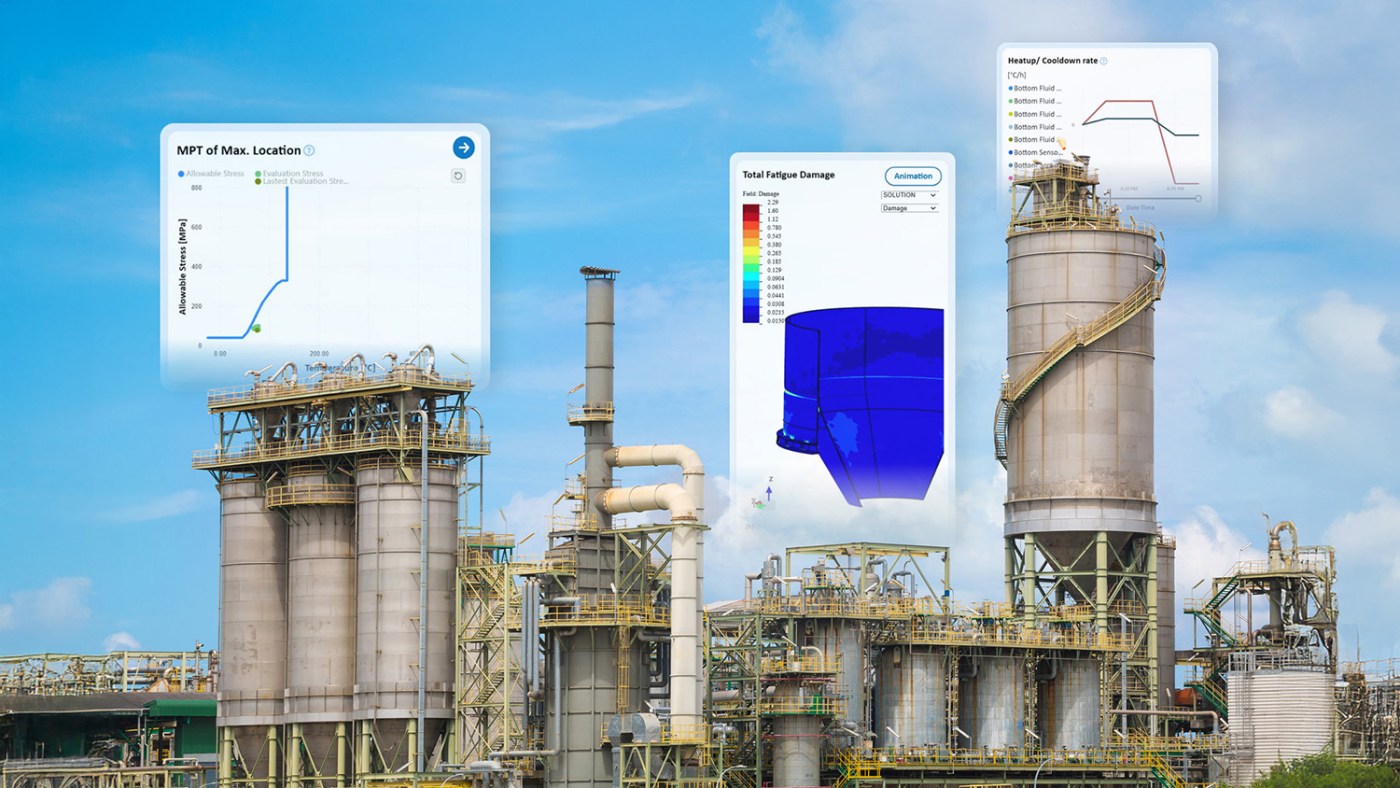
Infrastructure intelligence is the ability to understand how critical physical assets behave in real operating conditions, and to use that insight to improve resilience, performance, and capital efficiency. It is what allows operators to move beyond lagging indicators and static design assumptions toward a more dynamic understanding of structural reality.
For Akselos, this is the space where Structural Performance Management creates value. By bringing continuous, physics-based insight into the behaviour of critical assets, SPM helps operators understand where operating margin exists, where it is closing, and what actions can be taken safely to improve outcomes. That can support a wide range of decisions, from throughput and turnaround planning to life extension, CAPEX prioritization, and operational flexibility.
The relevance of that capability is increasing because the market context is changing. CERAWeek confirmed that operators are being asked to do more with existing assets, under greater scrutiny, with less tolerance for failure and stronger pressure to prove the value of technology investments.
Why this matters now
The energy industry is entering a period where infrastructure performance is becoming more strategic, not less. Geopolitical risk has raised the premium on resilience. AI is being held to a higher standard of proof. Existing assets are carrying more of the burden for growth, continuity, and competitiveness.
That combination changes how technology should be evaluated.
The winners in this environment will not be the companies with the most digital activity. They will be the ones with the clearest, most actionable understanding of the infrastructure they depend on. They will be the ones that can reduce uncertainty, make better trade-offs, and operate with more confidence when conditions become more demanding.
CERAWeek 2026 made that direction unmistakable. The conversation is no longer just about modernization. It is about operational certainty. And increasingly, operational certainty depends on infrastructure intelligence.