
Operational efficiency initiatives often stall in complex plants because performance is constrained by physical behavior, not just effort, process, or discipline.

When people talk about operational efficiency, they think about optimizing the process and the resources surrounding it. In capital-intensive sectors like process manufacturing (e.g. oil and gas, petrochemical production), when output is flat or margins refuse to improve, the default assumption is that the plant needs better discipline and tighter processes.
That belief is understandable. Most complex plants have invested heavily in optimization programs like Asset Performance Management (APM), Real-time Optimization (RTO), Advanced Process Control (APC) or fine-tune operating routines. Those efforts do create gains in output.
Why do operational efficiency programs often flatten in complex plants?
Operational efficiency is the ability of industrial organizations to improve the performance of critical assets and production systems through advanced technologies that enable more informed decisions, lower operating costs, and greater throughput.
To improve output, a plant may run debottlenecking projects, reliability programs, energy reduction efforts, advanced control initiatives, and operating discipline campaigns.
Each of these can produce measurable gains. They remove waste, stabilize performance, and tighten execution around known variables. But they also share a common assumption. They assume that the next increment of performance is available if the plant is managed well enough.
In simple systems, that assumption often holds.
In complex plants, it becomes less reliable over time as gains often flatten sooner than expected. Throughput improvement becomes harder to repeat. Production optimization starts to feel incremental. Teams work harder, yet results are not there to show for it.
And as plants age, becoming more tightly integrated and operating closer to commercial pressure, local improvements stop translating into system-wide results. A unit can be optimized while the broader plant remains constrained. A bottleneck can be relieved in one area only to reappear somewhere less visible.
That is why many efficiency programs create an early lift and then stall. They improve what is easy to observe, but they do not always expose what is truly limiting the site.
The reality is that these limits have not been clearly understood. What looks like a resource or process problem may actually be a physical constraint, one that organizations don’t have the means to see clearly enough to manage.
And this need for clarity is driving leadership to spend more, with 75% of industrial leaders wanting to invest in production and yield optimization, according to Verdantix’ 2025 Global Corporate Industrial Transformation Survey.
A Pattern Seen in Practice
During CERAWeek 2026, in an industry discussion with Akselos, Heather Gilligan, Senior Technical Leader at Pyxis Group, shared an anecdote from her 25 years of working at ExxonMobil.
At some point, if you have worked in operations, you have gotten that phone call in a refinery:
“Hey, we have this opportunity cargo, but it doesn’t meet the usual specification. Can we run it anyway, because it is really cheap?”
And often, the answer is:
“Well, I don’t know. Our equipment strategy says we have got to stay here.”
As a result, those opportunity cargos get missed, because we don’t know how to evaluate them quickly and we don’t know how to keep track of any accumulated risk from those opportunity cargos.
This anecdote illustrates the quiet hesitation that creates drag in operations, even to this day.
What are the bottlenecks that block throughput improvement?
Bottlenecks, the bane of production systems that limit plant throughput.
Their discoveries follow a familiar pattern in a plant. Operations push a unit harder for short periods, throughput rises accordingly until a warning appears and throughput worsens beyond a certain rate. And when integrity teams perform inspections and update their Integrity Operating Window (IOW), operations gets more cautious about making the change part of normal operations.
These bottlenecks are not always formal design limits of the asset. Just as often, they are operational limits built from caution, past incidents, fragmented knowledge, and incomplete visibility into how the asset behaves under stress.

That is what makes them difficult for leadership to diagnose. The plant appears to have room on paper, but in reality is constrained, and no one can say whether the constraint is truly physical, historically inherited, or simply assumed.
In practice, this is where many plant bottlenecks become mischaracterized. The visible bottleneck is treated as the root cause, while the deeper constraint is the uncertainty around what the asset can safely tolerate.
Why do teams often operate below true safe limits?
In industrial operations, safety is paramount. Teams are cautious, either from their engineering training or working experience.
When the physical consequences of a change cannot be assessed quickly and confidently, people default to conservative decisions, such as design specification sheets and rules of thumb. That is especially true in large plants where process changes can create stress, fatigue, or degradation effects that are hard to see directly.
So the plant is often managed through proxies:
- Historical experience
- Rules of thumb
- Procedural buffers
- Engineering judgment
- Safety margins built over time
Those methods are necessary. But they can also create a hidden form of underperformance.
The issue is not that teams are too conservative. The issue is that they often do not know where conservatism ends and real limits begin.
This distinction matters. It means production optimization can stall even when the plant is not yet at its true safe boundary. It also means some operating decisions carry more risk than expected because the physical response of the system is not well understood at the moment.
The result is a narrow operating envelope shaped as much by uncertainty as by actual constraint.
What blind spot keeps production optimization from scaling?
The blind spot is structural behavior.
Complex plants are usually managed through process performance, maintenance status, and reliability indicators. Those views are essential, but they do not fully explain how the physical asset itself is behaving under changing operating conditions.
That matters because the plant is not a series of process flowcharts, it is a physical structure carrying load, pressure, temperature,, and interaction effects over time.
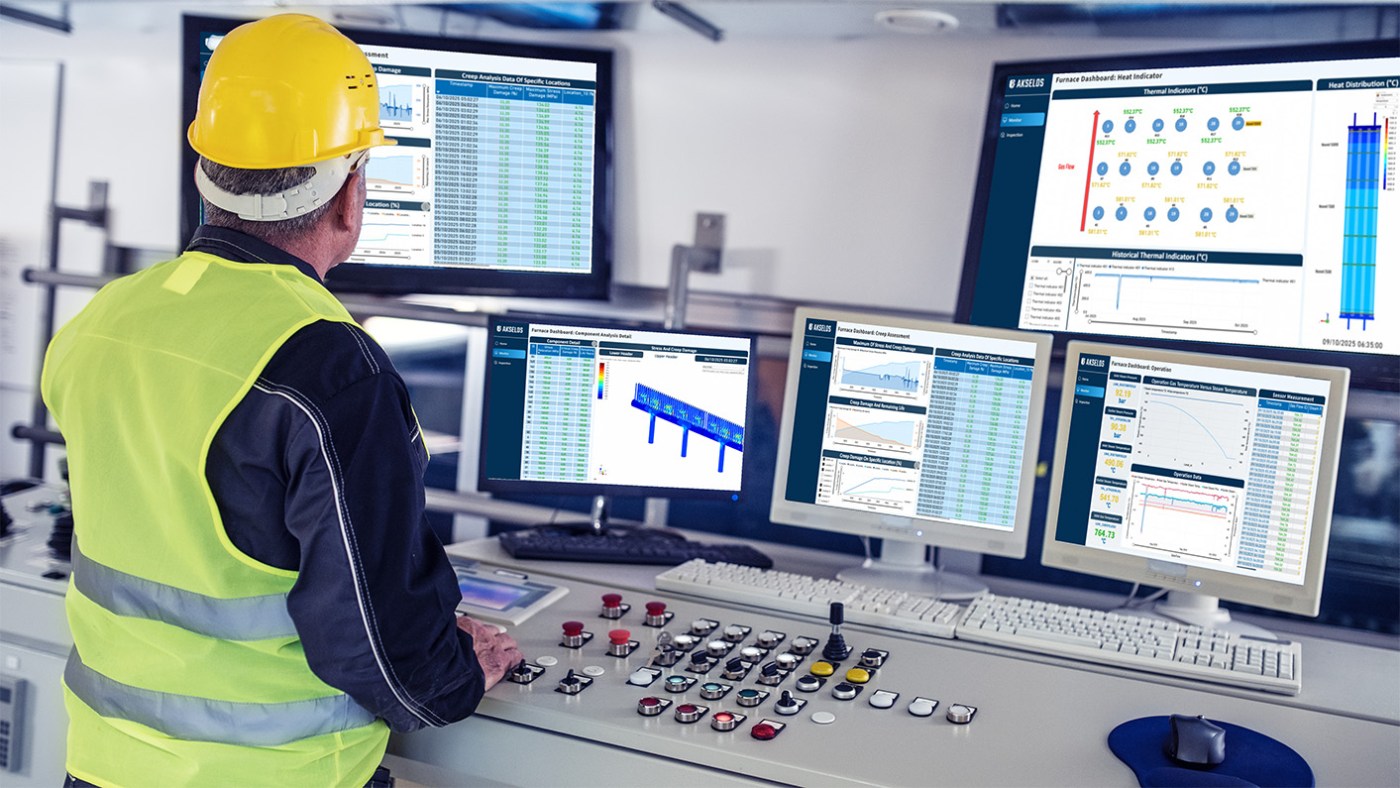
When that structural behavior is not part of the operating picture, management decisions become lopsided. The process side may see room for higher rates. The commercial side may see pressure to push. The integrity side may see reasons for caution based on past inspections and equipment strategy. And no one is working from the current integrity picture of the assets.
This is why some bottlenecks persist even after repeated intervention. The bottleneck is not only in equipment, workflow, or planning. It is in the organization’s ability to understand how the plant’s physical behavior shapes the safe and economic operating envelope.
Until that is addressed, operational efficiency remains partly disconnected from physics.
What must change conceptually?
Because of the structural blindspot, teams keep chasing bottlenecks.
In complex plants, the next performance gain is often unlocked by understanding the physical boundaries that govern safer, longer and harder operations .
That changes the management question. Instead of asking only where output is being lost, leaders also need to ask which constraints are real, which are inherited, and which are artifacts of incomplete visibility.
That shift has strategic benefits. It changes:
- How plant bottlenecks are identified
- How throughput improvement is evaluated
- How rigorously plants need to manage their process
- How risk, reliability, and production optimization are discussed across functions
- And more importantly, how well the organization understands the plant’s true behavior
Through this change, leadership can start to see the correct way to continue optimizing.
Oz shapes the category of AI for Structural Integrity and works with industry leaders to scale adoption across complex industrial environments. He will be available for strategic conversations on predictive performance, category leadership, and how SPM accelerates industrial AI programs.