
EP. 02
Devotion to Human Performance
A HYROX world championship racer, a career chemist, and a rule he applies to both: small correct decisions, repeated, beat the big dramatic move.
Dr. Bill Bender
Chief Innovation Officer, Duravi
~27 minutes
Video first
About this episode
Bill Bender raced at the HYROX World Championship in Stockholm, the finish line of a partnership win and decades of training in triathlon before that. He’s also spent thirty years deciding which industrial technologies are worth backing, most recently placing that bet on Duravi. The episode turns on one line from the conversation: “Inside that, there’s a chemistry kid.” Endurance sport and industrial chemistry, he argues, reward the same thing: small, correct decisions added up over time, not the big dramatic move.
That same instinct is what shaped his formula for picking which innovations get backed and which don’t, will someone actually pay for it, and can the team really do what they say. It’s the test behind a career spent helping other people’s breakthroughs see the light, one bet at a time, and it’s exactly what led him to Duravi.
Episode structure
Two kinds of performance | 3 min
Bender’s HYROX World Championship run in Stockholm, the parallel he draws between endurance sport and industrial chemistry, joining Duravi and how its “does anybody care” test applies to solving industrial friction, and the early-career decision to leave bench chemistry for the business side of innovation.
Why AI changes the math | 16 min
Bender’s test for backing a new technology: will someone actually pay for it, and can the team really do what they say. His case for open innovation and “creative destruction,” and why he sees AI as the most powerful open-innovation tool yet – capable of surfacing connections a single expert or company would never find on their own, and turning a months-long research job into a two-hour one.
Changing the metal, not the coating | 3 min
How he ended up at Duravi, and what the technology actually does: changing the metal’s surface itself, not adding another coating on top of it. How the company holds up against his own test for backing something new.
The two he still talks about | 5 min
A cancer immunotherapy company that automates modifying a patient’s own T-cells to fight their specific cancer, and a focused-ultrasound device that treats tremor and addiction by targeting tiny regions of the brain. Bender explains what made both of them stick with him, then closes on how AI could compress the healthcare breakthroughs still to come.
Full transcript: Asset Life EP.02 with Dr. Bill Bender
[00:35] Oz Rodriguez: Welcome, everybody, to the second episode of Asset Life. Today we have an awesome guest, Dr. Bill Bender, Chief Innovation Officer at Duravi. Hi, Bill. Thanks for joining the show.
[00:45] Bill Bender: Hi, Oz, good morning. Thanks for having me.
[00:48] Oz: All right. You’ve done something pretty remarkable in a demanding sport: you raced at the HYROX World Championships in Stockholm against the best in the world in your age group. Sport has been a defining part of your life for a long time. Why? And for those who don’t know, what’s HYROX?
[01:06] Bill: I have an extensive background in triathlon, with a foundation in running and swimming. After a few decades in that sport, I thought it would be a really interesting challenge to try a new one. About a year and a half ago, I learned about a new sport called HYROX. It’s a kind of CrossFit racing, and it’s pretty much global now, with several million participants. It combines running and CrossFit exercises in a standardized race format. The HYROX organization holds a couple of hundred races around the world each year. If you’re fortunate enough to win one of those events, which my partner and I were, you get invited to the World Championships, which were in Stockholm in June.
[01:52] Oz: That’s amazing. Inside that athlete there’s a chemistry kid, right? Here’s what strikes me. Endurance sport and industrial chemistry reward the same thing: small, correct decisions added up over time, not the big dramatic move. Did the athlete teach the chemist, or the chemist teach the athlete? Or did you arrive at both at the same time?
[02:13] Bill: They really were kind of simultaneous, because I started my athletic career in high school and college. And you’re right, there are interesting similarities. There are lots of small steps, analysis and experimentation, trying new things and new training techniques, and learning something new about racing. In the scientific community, it’s a constant journey like that. The technology evolves and changes over time, and as you change roles through your career, there’s a whole new set of information, knowledge and capabilities to learn. So there are a lot of analogies between the two.
[02:52] Oz: That’s why I wanted to ask you that question, because they seem linked. They seem to go hand in hand.
[03:00] Bill: One’s a little more mental and one’s a little more physical, but…
[03:04] Oz: Exactly. It’s all about human performance, right? Both sides are important.
[03:10] Bill: And the more work and the more detail you put into it, the more successful you can be.
[03:14] Oz: I agree. You spent the early part of your career in the lab, right? At some point, you stepped out of the beaker and into the business of helping other people’s breakthroughs. What made you make that jump?
[03:25] Bill: Really, it was interest level. When you get a degree in chemistry, the expectation coming out of school is that you’ll work in the lab to develop a piece of science. Honestly, I was never very good at that part, and I didn’t find it very interesting. What I really enjoyed was taking technical innovations and driving them into operational and commercial success. So pretty early in my career, I decided I really wanted to work in the innovation space, and I’ve been fortunate enough to do that in a variety of fields over the last 30 years or so. For me, it was about interest and the best way I could create value for where I was working.
[04:10] Oz: So did you have an investor mindset early on? Was that what you were going for?
[04:15] Bill: I didn’t think of it that way at the time. But the first few roles I had in that space were really as an internal entrepreneur, developing new technology for the companies or businesses I was working for. And it’s fairly similar. You have to go through a series of steps: develop the technology, commercialize it, convince stakeholders to invest in it, deploy it, test it, and then prove commercial feasibility and long-term value creation. Whether it’s an internal entrepreneur in the enterprise where you work or an external entrepreneur developing technology you want to bring into the business, there are a lot of similarities.
[04:56] Oz: All right.
[04:56] Bill: It wasn’t until later in my career that my work became more heavily focused on open innovation, or external innovation, where ideas from outside the enterprise were brought in to create partnerships with the business I was working for.
[05:13] Oz: That makes sense. So when you worked in this innovation lab, you didn’t just back promising startups. The whole idea was something called creative innovation, right? Or destruction?
[05:27] Bill: Creative destruction, or creative innovation.
[05:29] Oz: How does that work? And is it different from the usual investment playbook?
[05:39] Bill: In the later portion of my career, I was working in an innovation and investing business. Our goal was twofold. One was to invest in really high-quality entrepreneurs who would create economic return. But a major part of my role was to find technologies we could invest in and also bring into and deploy within the enterprise. That was done to drive innovation, to drive creative destruction, and to find new technologies.
I’ve always been a big believer in the theory of open innovation. It doesn’t matter where the innovation comes from: create partnerships with the innovators, create mutual benefit, bring their technology into the organization, and deploy it to create value. For most of my career, that meant internal innovators. But for the last seven, eight, nine years, it’s been more focused on external innovators.
It’s really evident now in the world of AI. Think about how much the world knows. An enterprise or an individual can only know a very tiny fraction of it. So if you have a problem to solve, it’s much more likely that someone outside has already solved it for another need or another business, and you can bring their ideas into yours and create innovation for the business. That’s open innovation, or external innovation.
Investing is very similar. You’re looking for external people with great ideas and new technology you can partner with. That partnership can be an investment in their business, bringing their technology into the enterprise and deploying it, or both. And you’d be surprised: innovators who invent new technology and are looking for investors are very happy to have both, because the two things that are lifeblood for them are sales and investment.
[07:34] Oz: Reflecting on that a little, I feel like when you’re doing open innovation with the backing of a company that understands your vertical, it helps you get to product-market fit faster. You’re not stumbling around asking where this innovation lands or what the best use case is. You have that advantage, and second, you have real industrial use cases and industrial data you can test your hypothesis against. Correct?
[08:04] Bill: Yes. On the first part of your question, the places I’ve been fortunate enough to work, and some of the amazing innovators, engineers, chemists and scientists I’ve worked with over my career, have been fantastic. They’ve invented some amazing things. But they tend to focus their solution space in an area they know very well. Oftentimes they may not be aware of other spaces, other technology areas, or other techniques that could creatively solve problems that are important to the business. So by going externally and leveraging both internal and external innovation, you dramatically broaden the playing field where you can find opportunities to create value.
I’ve also had the good fortune to work for a couple of very large industrial enterprises. When you partner with entrepreneurs or inventors outside, they’re generally very pleased to have access to the opportunities, resources and knowledge within an enterprise like that.
[09:06] Oz: That’s super interesting. I was at a conference earlier this year, and there was someone from MIT who said the partnership between academia and industry needs to be stronger. Academia gives you the method, but industry gives you the real use case and the actual data, so you can prove your technology and ideas on it, which you don’t have in academia.
[09:30] Bill: Those types of relationships are very interesting, because there’s really a third part I learned about over the years. There needs to be an inventive step. Often, at universities, particularly high-quality institutions like MIT, you see the inventive step. On the industrial side, you have an industrial need. But what’s often missing in the middle is the development of that innovation into a business.
Earlier in my career, particularly when I was working for an industrial enterprise, we had ties to places like MIT, and there was always a level of frustration from senior management: we’re spending time and money with MIT, or any other university, I’m not singling them out, but there’s not a lot of technology we can bring directly into our business. That’s because there’s often a required step of development and commercialization. An enterprise like Dow Chemical or Koch Industries can’t really take a raw idea from MIT and commercialize it.
[10:38] Oz: Correct.
[10:39] Bill: Where we’ve seen more success is where universities, and MIT is a great example, have incubation engines to help inventors form the idea into a small business that can get funded, develop and commercialize the technology, and support it. Then we in industry can buy it from them and deploy it with some support. Over the last decade, many of the top universities with research programs that want an industrial tie have built innovation engines, incubation engines, or some other type of entity that funds the entrepreneurs and helps them develop the idea into a business. That makes the interface with industry go much more smoothly. It takes more time, but it increases the chance of success.
[11:30] Oz: And it reduces the risk of failure, because a large number of people try to start something and fail. I think that’s one of the key things.
[11:39] Bill: Yes. It’s really difficult for a large company running large operational assets to take a very new idea that hasn’t been developed commercially.
[11:46] Oz: Which is critical. If something fails, there are actual physical consequences for people, the environment and so on. It’s not like trying a new online editor for YouTube videos. Industrial is a completely different space. You have to be more careful.
[12:03] Bill: Exactly. Think about the scale of the enterprise and the strong desire for environmental and safety performance, and operational reliability. The cost of downtime is massive. So there’s a lot of conservatism in making sure that what goes into these types of operations will perform very well: not only creating the value it’s intended or advertised to create, but not causing any unintended consequences on the side.
[12:30] Oz: Yes, that’s definitely key in industrial settings, and now in industrial AI, which is the newest thing with the AI revolution. Which brings me to an interesting question. Say a technology lands in front of you. What are you actually looking at? The person who built it, the problem they’re chasing, or the technology itself? You’re not allowed to say all of them. I know they’re all important, but there must be something that stands out for you. I want to know what you trust most when you have to make a call.
[13:04] Bill: Think about it from a technology investor’s standpoint. I’m thinking about my last role with Koch, investing in and then deploying tech into the enterprise. The first question I always asked, bluntly, was: does anybody care? In other words, will somebody pay for this? Does it create enough value, and is that value well enough understood that a customer, internal or external, would be willing to put up money to obtain the technology and deploy it?
The second question is: can they actually do it? When you’re looking at fairly early technology, you often have to say, prove to us that you can really do what you say, because some of your ideas sound a little crazy. I’ve seen some really interesting entrepreneurs who have invented things that are just astounding. As a side note, with all the interesting technology I’ve gotten to see over the last eight years, there’s an amazing future coming in so many fields. We’re seeing it now with the advent of AI, but there’s amazing innovation coming in industrial, materials and healthcare too.
So the two things I really look for are, number one: does anybody care? Will somebody pay? Does it create value? And second: can they do what they say? If both of those are positive, we’re often very willing to take the technology and try it out, do some deployments and early commercialization, and see how it goes. Some of the things we’ve done that way were super successful and got deployed across wide portions of the enterprise, and some not so much, and they had to go back to the drawing board or keep refining the technology.
[14:44] Oz: Yeah.
[14:44] Bill: From an investing standpoint, you then add in the quality of the entrepreneur, the quality of the enterprise, and the other things you need to assess to decide whether you want to provide significant capital.
[14:56] Oz: And now, in the era of AI… Before, we had a lot of slideware, right? Everything worked on the slide. Everything looked amazing on the slide, and then it took so much time to get to something you could actually work with and test, what we call the MVP, the minimum viable product. Nowadays, building a prototype with some of these tools takes maybe days, if you’re really detailed. The time to get a technology to a point where you can actually see and prove it has accelerated tremendously.
[15:30] Bill: It’s interesting that you bring that up, because, kind of selfishly, I look at it this way: AI and the tools we see now have proven my hypothesis that innovation is much faster and more successful when you can take into account knowledge from outside the enterprise. If you think about what AI does, it aggregates the knowledge of mankind, or significant portions of it, and can find connections we as humans would never see. So from an innovation standpoint, it’s the ultimate open innovation.
As a relatively new user of the technology over the last year or so, I’ve been continuously astounded, as you mentioned, at the rapid pace at which you can collect information. Not all of it is perfect or exactly right, and it still needs the human touch, the understanding, the planning and the strategy. But the ability to look for a solution to a problem or an answer to a question is remarkable. In fact, we just did one this past week. I won’t go into the details, but it’s a piece of work that in the past would have taken a skilled analyst months, and we were able to get the knowledge and information we needed in literally about two hours.
[16:50] Oz: Agreed.
[16:51] Bill: These are tools that are going to make everybody more effective in their role. And if you’re not using them, you’re going to get left behind quickly.
[17:00] Oz: Very quickly. And to that point, I agree with what you said about innovation and your hypothesis being proven. What AI does is amplify your search space. You know something, but now you have so many lateral directions you can take from your core. You can bring in ideas from other industries that, ten years ago, would have required a PhD or hiring that person to bring the knowledge into your innovation. Now you can have a certain level of understanding and connect the dots much more easily than before.
[17:42] Bill: Even within one’s own field. I’m a trained chemist by background, though I haven’t practiced very much, as we talked about earlier. Just in the field of chemistry, there are literally millions of topics. It touches everything, especially if you include biochemistry. In the past, getting asked a question in a particular field would have involved a lot of research, digging, reading, refreshing, or talking to experts and consultants, as you mentioned. Now there are tools that can access that knowledge. I’ve had a number of cases in this role since I started in April where I needed to increase my knowledge rapidly in a particular field, and in an hour I knew enough to proceed with what I was working on. In the past, it would have taken me an hour just to figure out where to start.
[18:33] Oz: Yes, exactly.
[18:35] Bill: Where am I going to find this information? Now some of these tools are so powerful, it’s like having a conversation with a handful of world-class experts live on your computer.
[18:45] Oz: Correct. You’re not bouncing ideas off yourself or waiting for a meeting to see what your boss and peers think.
So, Bill, you recently joined Duravi as Chief Innovation Officer. What are you up to these days?
[19:02] Bill: It was a really interesting opportunity that came up as I was retiring from my main career: a role with one of the startups I had met along the way. It’s really intriguing because they have a really interesting technology in the lubrication space, which is a fairly mature, commoditized market without a huge amount of innovation. They’ve developed a new technology that operates differently. Most lubricants work by putting a thin coating of materials, oils and other things on the surface of a metal. The Duravi technology is really interesting because instead of lubricating the metal, it actually changes the surface of the metal. It smooths and flattens the surface and makes it more amenable to the oil and other lubricants that are added. So it’s fairly universal, very disruptive, and really interesting.
When they approached me, it sounded like a great technology with a really interesting team. Right now we’re primarily focused on continuing to advance the science and our understanding of how broadly this technology can be applied. We’re in the fairly early stages of revenue generation, at the inflection point where the customer base is growing, so we’re trying to drive both the innovation and the commercialization.
[20:29] Oz: So, Bill, I’m curious: does this company meet your criteria?
[20:35] Bill: They absolutely do. Think about the lubrication market. The world spends literally trillions of dollars overcoming friction: the cost, the materials, the carbon generation. There’s a huge amount of effort in lubricating engines, equipment and a whole range of things. So the first question: does anybody care, and would they be willing to pay for a solution? The answer is absolutely yes.
[21:04] Oz: Everybody.
[21:05] Bill: The market potential is super broad and massive. Then the second question: can they do what they say? The answer is absolutely yes, they can. It’s a new field of science with a new technology, so it takes a little while to convince some of the people who run rotating equipment and engines that this type of technology can work very differently to create value. But after seeing dozens of demos and dozens of customer success stories, absolutely, the company can do what it says, and I believe it has a pretty bright future.
[21:38] Oz: Let me finish with this. It’s been an amazing conversation. Of all your years working with startups, which one do you always go back to as the example, because it was a great technology and a great journey? Can you describe the journey a little, and what you think made it successful?
[22:04] Bill: There’s a bunch I could pick from, but I’d like to pick one or two from my last role at Koch, where we were doing tech investing. There were a few innovators in the healthcare space, where I’m not an expert, so I’m relatively easy to astound, but I know enough about healthcare.
There’s a particular company that can take a pint of whole blood from a cancer patient, put it into a completely automated robotic system, and a week later produce that patient’s immune T cells, modified to fight the specific cancer they have.
[22:48] Oz: Wow.
[22:48] Bill: It’s mind-boggling. Each of the technologies this robotic system executes is relatively well known to science. But these are the first people to aggregate that set of technologies to make patient-specific immunotherapies based on a patient’s own T cells, their own immune cells, to fight their specific cancer. At that time, there were only six or eight FDA-approved treatments of this kind, but there are thousands more in the pipeline. Someday, this type of tool may help millions of people fight and defeat cancer. Where there have been FDA-approved treatments and success, the recurrence rates are very low, because these cells remain in your body and propagate for the rest of your life. It’s just amazing what’s possible.
I want to mention a second one, again in healthcare, which was an investment the business made a number of years ago. There’s a company that figured out how to create an array of ultrasonic transducers and send ultrasonic energy into the body, typically the brain, at a very narrow point, to ablate very small parts of the brain. You can look this company up. It’s amazing technology. They tie it to an MRI machine. They’re able to do things like fight addiction. There are very specific centers in the brain that can lead to addiction, and if they can ablate and kill those few cells, they can help people fight addiction. There are also people who have tremors and shake uncontrollably.
[24:29] Oz: Like Parkinson’s, something like that.
[24:31] Bill: Parkinson’s is one, at least as of the last time I looked it up, along with other types of tremor disorders. The MRI can show where in the brain the tremor is being caused. They focus all these ultrasonic beams on a very narrow point and ablate a small group of cells. You see videos of these people before the treatment, and they can’t even hold anything. When they’re done, it’s gone. It’s simply amazing.
It’s what I mentioned a few minutes ago. There are so many fields now where the amount of innovation coming from entrepreneurs in the US and around the world is astounding. I predict the next 20 years are going to be amazing for society, particularly in healthcare. And those are just two. We’ve literally seen dozens and dozens of other companies working on the technology, the management and the payment system. The healthcare system is going to be dramatically innovated over the next decade.
[25:23] Oz: And we need it. It’s so sad to see family and friends die of these types of diseases that could affect you at any time. Nobody’s immune to them. So it’s amazing that we’re making these breakthroughs. Was that before the era of AI?
[25:42] Bill: These were both before, and that’s what excites me even more. Think about open innovation in healthcare. The science of medicine is astoundingly complicated and astoundingly large. What’s really exciting to me about AI is whether there are tie points among knowledge sets that don’t connect today. AI could draw connections that help us do drug design and efficacy studies much faster, and propose new types of cures or treatments that take parts from three different fields where people in the past didn’t see the connections, allowing us to get to some of these solutions more rapidly.
[26:22] Oz: Amazing. Well, Bill, thank you so much for taking the time to talk to us today. It’s been a pleasure having you on the show, and I hope to see you again.
[26:31] Bill: Thank you for the invitation. Good luck to you.
[26:33] Oz: All right. Take care. Bye.
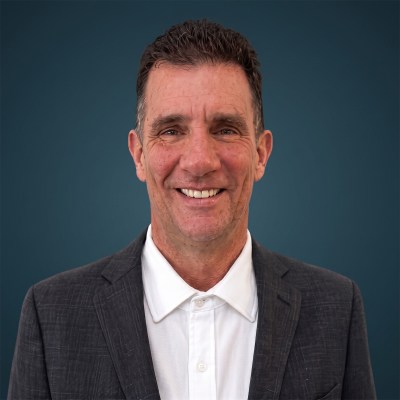
Dr. Bill Bender | Guest
Chief Innovation Officer, Duravi
Bender has spent close to thirty years working across internal and external innovation roles at large enterprises, most recently leading technology investing and deployment at Koch.
Trained as a chemist, he built his career on commercializing other people’s science rather than doing bench work himself. He joined Duravi as Chief Innovation Officer, and competed at the HYROX World Championship level after decades in triathlon.
NEWSLETTER
PREVIOUS EPISODE
EP. 01
From Molecule to Market
DME is a fuel molecule that’s been sitting in refrigerators and aerosol cans for a century. This episode is about how it also became a diesel replacement.
Guest: Elliot Anise-Hicks | Co-Founder & Board Director, Oberon Fuels