
EP. 01
From Molecule to Market
DME is a fuel molecule that’s been sitting in refrigerators and aerosol cans for a century. This episode is about how it also became a diesel replacement.
Elliot Anise-Hicks
Co-Founder & Board Director, Oberon Fuels
~22 minutes
Video first
About this episode
Dimethyl ether, or DME, is a fuel molecule that’s been used for over a century as an aerosol propellant and refrigerant. It’s also a near drop-in replacement for diesel: it handles like propane, burns without producing particulate matter, and matches diesel’s cetane performance. This episode is about how Oberon Fuels turned that molecule into a commercial fuel, and how the same production line ended up supplying L’Oréal’s aerosol cans.
Elliot Anise-Hicks co-founded Oberon Fuels in 2010, after a career path that started with a solar-powered car he raced at MIT in 1994. Oberon produced North America’s first fuel-grade DME in 2013 and switched to 100% renewable DME production in 2021. In 2011, as diesel emissions rules tightened and engine costs climbed, the company made its founding bet: stop at DME instead of pushing on to gasoline, and sell it as a diesel replacement in its own right.
The core idea in this conversation: converting a diesel engine to run on DME means swapping a tank and a few hoses, not rebuilding the vehicle, because DME can move through the propane infrastructure that already exists. Anise-Hicks argues that’s the more realistic path to decarbonizing heavy transport than building new infrastructure from scratch, and the rest of the episode tests that idea against hydrogen, rail, and the beauty aisle.
Episode structure
The Molecule | 6 min
DME’s hundred-year run as a refrigerant and propellant, why Oberon chose to stop at DME instead of pushing through to gasoline in 2011, and the MIT solar car race that put Anise-Hicks on this path in the first place.
Built on what already exists | 8 min
Why switching a diesel engine to DME means swapping a tank and some hoses, not the vehicle. The comparison to hydrogen’s problem on the rail network, where 26,000 power units and no way to fuel them make a “replace everything” plan a nonstarter, and why Anise-Hicks bets on incremental change over a big bang.
Molecule to market | 8 min
How the same renewable DME plant built for diesel trucks now supplies L’Oréal’s aerosol cans, why Anise-Hicks calls the current energy market a snow globe that’s still being shaken, and what changed in his thinking after sixteen years as CTO and a recent move to the board.
Full transcript: Asset Life EP.01 with Elliot Anise-Hicks
[00:33] Oz Rodriguez: Hello everybody, welcome to Asset Life. I’m your host, and our guest today is Elliot Anise-Hicks from Oberon Fuels. Hi, Elliot, how are you?
[00:41] Elliot Anise-Hicks: I’m doing well. Good to see you, Oz.
[00:44] Oz: Good to see you. Thanks for joining us. All right, I’m going to take you back down memory lane. 1994, you’re at MIT racing a solar-powered car in the Tour de Sol. That sounds pretty fun and cool. What was going through your mind back then? Is that the same itch that has followed you through your thirty-year career?
[01:03] Elliot: It is, and I’ll actually go back a little further. The whole reason I ended up at MIT was that I grew up in a very small town in Western Canada. When I was starting to think about colleges, I read an article in Popular Science about a solar car race across Australia that was won by a team from MIT, and I’d never heard of MIT before. So I asked my mom, “What’s MIT?” and she said, “I don’t know.” I thought it might be an interesting place to go. They had this solar car program, and I thought it was really interesting. Moving beyond gasoline and the traditional way we power vehicles, getting to a sustainable future and innovating on how we move around, was something I was really interested in and passionate about.
This was pre-internet, at least where I was growing up. So my mom told me to go down to the library to get the address so I could write away for information. I went to the library and asked, “Can I get the address for MIT?” They said, “What is that?” I said, “I don’t know. It might be Michigan Institute of Technology.” They couldn’t find that, but they found Massachusetts Institute of Technology and asked, “Might that be it?” I said, “That might be it.” So I wrote away to that one, and that started my journey.
I was excited to join the solar car team when I got to MIT. I was a small part of the team, and we had a cool little commuter-class vehicle with side-by-side seats. It was a very funky little vehicle, and it was a lot of fun to work on. It was very avant-garde and wasn’t ready to go out on the streets. The electric car industry and its technology have moved a tremendous amount since then.
Part of what was fun was how innovative and different it was, taking a new approach. But I also think there’s a real need for solutions that are practical, and that tied into Oberon. Oberon came around years later, and the opportunity to step in and come up with a new, sustainable way of producing fuel for vehicles was really exciting. It felt like coming home to what I was passionate about as a teenager reading Popular Science back in Canada.
[03:32] Oz: That’s really cool. Let’s talk about Oberon. I don’t think a lot of people are familiar with renewable DME. Would you mind telling us what it is and why it’s important?
[03:46] Elliot: Sure. DME itself has been around for a long time. It’s been used for over a century in different applications, and it’s a very versatile molecule. It can be used as an aerosol propellant, as a refrigerant, and as a diesel replacement.
When Oberon first started, we were looking at biogas as an underutilized resource and converting it to gasoline to get a liquid fuel. That was the initial impetus. But getting to gasoline required riskier technology than was available at the time. If you looked at established processes like methanol-to-olefins technology, you go through DME along the way. We realized that if we stopped at DME, we’d cut out a bunch of the process and potentially lower the cost.
The decision to make DME as a diesel replacement came in early 2011, very early in Oberon’s life. At that time, emissions requirements on Class 8 diesel trucks in North America had ratcheted up significantly. That was a good thing, because it cut down on the particulate matter and NOx coming out of the trucks. But it also showed the limitations of conventional diesel as a fuel. Engine costs were going up, emissions control systems were much more expensive, and they added operational complications.
DME doesn’t generate any particulate matter when it burns. I’ve actually got a molecule sitting right in front of me: an oxygen in the middle, two carbons, and hydrogens on the outside. Because of that oxygen in the middle, it burns without generating particulate matter. But you still get the same high performance and high cetane number you get with diesel, so you’re not trading off performance for a cleaner-burning fuel.
DME also handles very much like propane. Converting a diesel engine to run on DME is about the same as converting a gasoline engine to run on propane or LPG. It’s a very modest conversion to deliver the fuel, and the engine is really the same, giving the same performance with additional environmental benefits. That was the start of looking at renewable DME as a sustainable fuel option and a good alternative fuel for existing diesel engines.
[06:29] Oz: What I really like about this approach is that it’s a bit like the oil and gas industry. We have big, critical equipment for producing the products we use every day, and that equipment needs to be repaired and replaced, which takes millions of dollars and year-long projects. I love the philosophy of what you’re describing: use the same engine, the same tank, the same things you own, but run something different through it. Do you think that’s a better way of evolving a technology like this?
[07:10] Elliot: Well, there’s always an economic challenge with switching to something different. It doesn’t matter what you’re switching to, there’s always a cost. The question is how big that cost is.
Because DME handles like propane, you can use propane equipment to handle it, store it and move it. There are a lot of existing assets out there for transporting it. And to modify a truck, a combine, a heavy piece of mining equipment, anything with a diesel engine, you’re not swapping out large portions of the vehicle. You’re swapping out some hoses and putting in a low-cost tank. It’s not insulated, it’s not cryogenic, and it doesn’t have to handle 10,000 PSI. It’s effectively a propane tank going onto a vehicle.
So the infrastructure cost to switch from conventional diesel to DME is pretty low, because we’re leveraging the supply chains and equipment already out there. There’s existing infrastructure that can handle the movement and delivery of DME with very modest tweaks. We had to work through lots of changes on the regulatory side, like getting taxation laws changed. Many things go into bringing a new fuel to market. But the actual cost of implementing a DME solution is quite low.
When we look at hydrogen and some of the other fuels, there’s great potential. But when you have to put in new equipment and entirely new technologies, it can get very expensive and challenging.
As an example, I was part of an industry panel looking at ways to decarbonize or lower emissions from the rail system. It was a very interesting discussion, and on hydrogen, someone who had worked at one of the major railroads pointed out that there are something on the order of 26,000 power units in the rail system. At the time, there was no tender solution for hauling and supplying hydrogen. So even if you said, “OK, we’re going to spend however much money it takes to replace all 26,000 power units with hydrogen power,” we don’t even have a solution we could put in place.
Then once you figure out what a hydrogen tender looks like and develop it, which is all new, you have to train people to use it, because it’s a totally different handling and filling mechanism than the large infrastructure already in place. It’s not an insurmountable challenge, but it’s very difficult, very expensive, and will take a long time.
When we can leverage existing infrastructure, it’s different. Nobody likes incremental improvements, but incremental improvements are still improvements. They’re ways we can get things done economically and quickly, and whatever assets we can leverage to do things cost-effectively and quickly are beneficial.
Would you rather spend all our focus and energy on moving the train system to hydrogen, or work on that while also decarbonizing the diesel going into that train system? I would take the benefit over the next couple of decades while we get the hydrogen part figured out.
[11:23] Oz: Exactly. Incremental benefits are still benefits. I agree with you 100%. Sometimes we try to do a big bang, and sometimes what moves the needle are those small increments where you see the benefits right away. I think that’s the right approach.
You spoke about hydrogen, and obviously this show is called Asset Life, so at some point we have to talk about assets. I was reading that you’re building something pretty cool: a reactor that makes clean hydrogen out of your own molecule. What’s the gap you’re trying to close with this innovation?
[11:56] Elliot: With hydrogen, being clean burning is wonderful, and advances are being made in how to produce it and bring costs down. There are different ways to do that. But moving and storing hydrogen is still quite expensive, and it requires new infrastructure.
If you use DME as a carrier molecule to transport hydrogen, you can use the existing propane infrastructure to move it. DME and methanol essentially convert under the same conditions to release hydrogen. Both are low-temperature options, so the reactor operates at low temperature. It’s quite efficient, quite safe, and lower cost, because you’re not operating close to 1,000°C as you would with a natural gas reformer.
If we’re deploying hydrogen into transportation or other areas we’re trying to decarbonize, we need to distribute it. The propane infrastructure we have, especially in the US, is quite extensive and covers the middle of the country. If you look at a map of propane distribution infrastructure and where we drive trucks, they overlap quite nicely. Methanol has great infrastructure too, but it’s very coastal, around industrial areas and shipping.
That doesn’t mean you can’t use methanol. But DME has advantages: it’s non-toxic, and it leverages existing propane infrastructure. If you want to get hydrogen into the middle of the country, say to an interstate going through Missouri, delivering it with DME can be cost-effective and safe. It leverages existing infrastructure, both physical assets and people. We already have people who know how to handle propane, and they can handle DME just as well. It’s the same skill set.
[14:15] Oz: Transferable, which is also important because it helps adoption.
Let me go back to something. You and I met at CERAWeek, and we had a really good discussion. Something that stuck with me: you said the industry was about to get shaken like a snow globe, with wreckage for some and openings for others. A lot has transpired since then. Do you still feel the same? Do you think some of that has already started taking place?
[14:48] Elliot: Yeah, things are clearly shaking out. A lot of projects that were conceived a few years ago are really struggling in the current environment. At the same time, the current environment is also highlighting the need for energy resilience and energy innovation. So there’s opportunity for innovation even as things are getting shaken up.
The other side is that because things are getting shaken up, there are people who have been doing great work who are now available to do new things. They’re not just going to do nothing. I wouldn’t say it’s exactly a good time, but it’s an interesting time, and there will be silver linings that come out of the not-so-great outcomes for a lot of projects that have been under development.
Looking globally, opportunities continue to develop in other places. In some ways, the globe is a game of whack-a-mole. You can beat down a project here, and all of a sudden someplace else looks more attractive. I think that’s happening. A lot of things we were doing well in the US are moving elsewhere, and some things that wouldn’t have been considered previously may be getting an opportunity here. It’s definitely not a calm time, but transition always opens opportunities.
[16:43] Oz: Speaking of opportunity, something I read recently about Oberon: we’re going to find you in the beauty aisle, because you now have a relationship with L’Oréal. How do you see your technology moving across verticals like that?
[17:01] Elliot: It’s interesting. When we first looked at DME as a diesel fuel, we did some research on DME back in 2011. DME has been around for a long time as an aerosol propellant. If you go back to the patent for the modern aerosol can design from the 1920s, it mentions DME as the example of a good propellant. So it’s been used for a long time.
DME is technically a VOC, and as regulations evolved, it lost some favor because of VOC rules, even though it’s a really high-quality aerosol propellant. A couple of years ago, regulators realized that the non-VOC aerosol replacements that hit the market had a very high global warming potential. They solved one problem and caused another. So they reviewed how strict they were on VOCs to try to balance things out. DME is technically a VOC, but it doesn’t have a significant impact on smog formation, and it has a low global warming potential. So it really is a great environmental aerosol.
At the same time, companies like L’Oréal have taken a lead in decarbonizing their supply chains, and they’re a major consumer of DME, so it’s a major part of their supply chain. They were a leader in looking for renewable DME. If you look for renewable DME in the world, you won’t find a lot of it right now, but you’ll come to Oberon pretty quickly.
Oberon first started producing DME in 2013 and switched to 100% renewable DME production in 2021. But it was fuel grade, because we were initially focused on making a diesel replacement and blending it with propane to lower propane’s carbon intensity. Our existing plant in California is designed for fuel grade. That doesn’t mean low quality. It just means we didn’t scrub out all of the odor, which you actually need if you’re blending with propane. If you’re buying something from L’Oréal, you don’t want it to have a sulfur smell. So we have to do some additional cleanup and switch over to aerosol production.
L’Oréal really led the way there, and we also got calls out of the blue from other companies looking to switch to DME and interested in a renewable product. There’s more corporate interest in renewable parts of the supply chain, and Oberon is riding that wave. We’re taking advantage of the renewable DME we can already make and shifting the focus from fuels to aerosol propellants in that part of the supply chain.
[20:09] Oz: That’s an amazing story. It shows how innovation sometimes takes different paths into different verticals. To wrap up: I was reading through your resume, and you recently moved from CTO to the board. Can you give us some perspective, looking back at your career, on this transition? How do you see yourself still making an impact in the industry from a different position?
[20:47] Elliot: It’s an interesting time. Sixteen years is a long time to be grinding away day in, day out, trying to get something done, so it’s a nice time to step back a little. Oberon is really in execution mode in terms of what the plants look like and what the opportunities are. As CTO, day to day, I was more focused on integrating new technologies and seeing what was out there. There’s a wonderful roadmap of opportunities, but it’s not really what the company needs right now. At the board level, I can still make connections to new technology companies and areas I think are interesting. There’s still a lot going on, and I’m excited about that. Being on the board is nice because there’s less day-to-day. There are a lot fewer meetings in my life now, which is pretty nice.
[21:43] Oz: Which allows you to do podcasts.
[21:44] Elliot: Exactly. Now I’m just doing podcasts. It’s a great shift and a nice time to step back. A lot of times with the day-to-day, you get caught up in whatever the current fire drill or focus is. Not having that day-to-day pressure gives me room to think about what’s interesting and what’s coming next, take a step back, see how things are evolving, and spend more time thinking. That’s something that’s easy to lose in the mix: taking time to reflect and ponder. I’m enjoying that aspect of it.
[22:27] Oz: I think we all want to be like you at some point, enjoying that broader view, with time to reflect and see the bigger picture instead of having our noses down in day-to-day activities. That’s it for our first episode of Asset Life. Thank you so much, Elliot, for making the time. We wish you all the best.
[22:46] Elliot: Thank you, Oz. It’s been a pleasure.
[22:48] Oz: Good luck.
[22:48] Elliot: Cheers, bye.
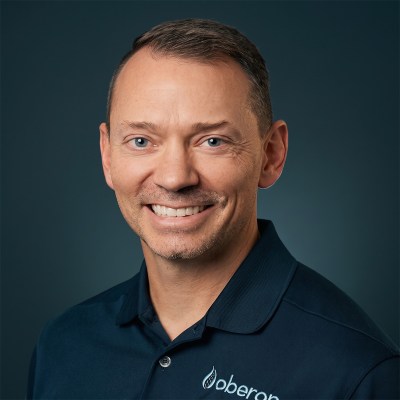
Elliot Anise-Hicks | Guest
Co-Founder & Board Director, Oberon Fuels
Anise-Hicks co-founded Oberon Fuels in 2010 and spent sixteen years as its CTO, taking the company from North America’s first fuel-grade DME plant in 2013 to 100% renewable DME production in 2021. He recently moved from the CTO role to the company’s board. He holds a B.S. in mechanical engineering from MIT, where he raced on the school’s solar electric vehicle team in the 1994 Tour de Sol.
NEWSLETTER
NEXT EPISODE
EP. 02
Devotion to Human Performance
A HYROX world championship racer, a career chemist, and a rule he applies to both: small correct decisions, repeated, beat the big dramatic move.
Guest: Dr. Bill Bender | Chief Innovation Officer, Duravi