
Industrial AI is transforming operations, but one critical layer remains largely invisible: the structural behavior of assets.

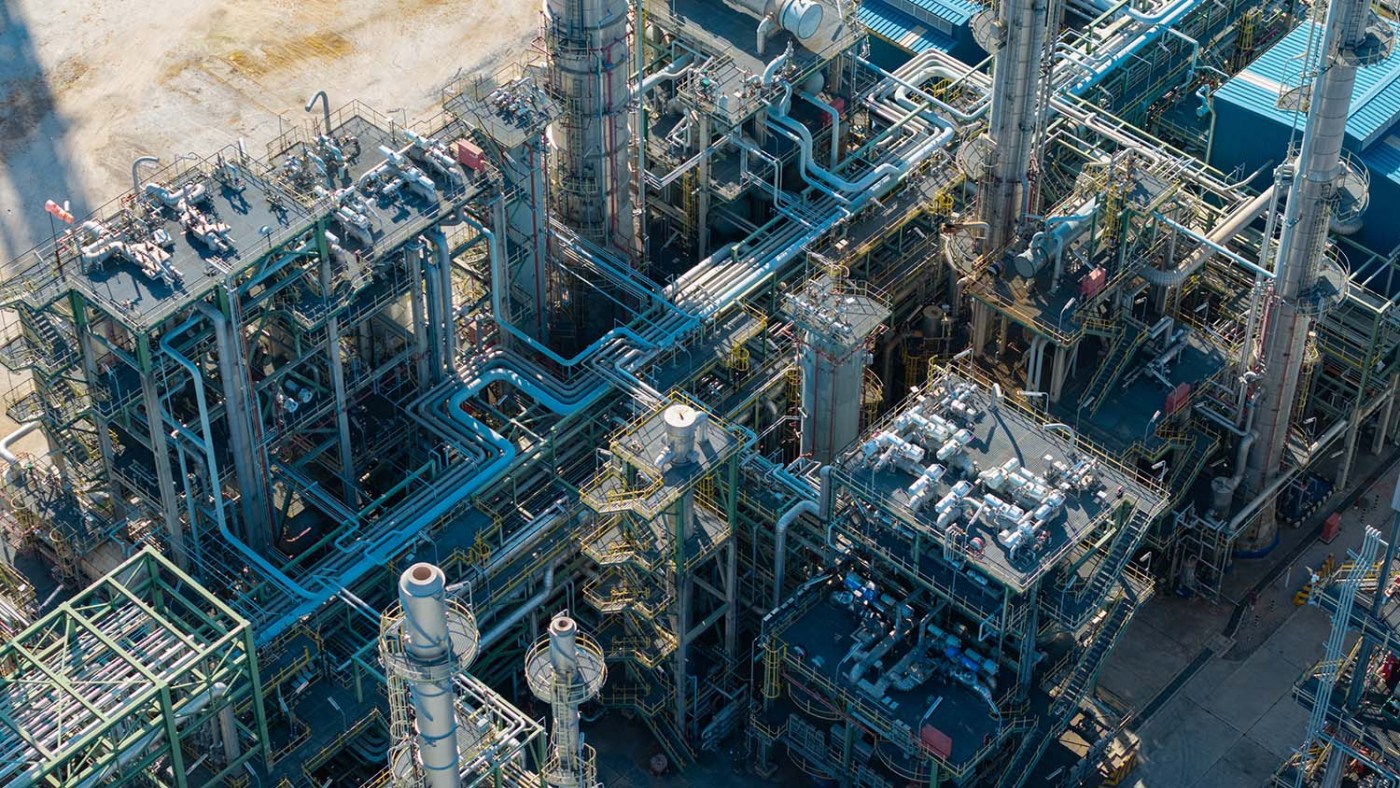
Industrial companies have spent decades optimizing processes, improving automation, and predicting equipment failures. Yet one critical part of industrial infrastructure has remained largely invisible during operations: the structural behavior of the asset itself.
At the ARC Industry Forum, Akselos CPTO Claus Reimers spoke with ARC Advisory Group about why this gap matters – and why a new class of digital twin focused on structural behavior may become essential for industrial operations.
For many operators managing aging infrastructure, the challenge is simple: how to safely run assets harder, longer, and more efficiently. Structural intelligence is emerging as a key part of the answer.
Not All Digital Twins Solve the Same Problem
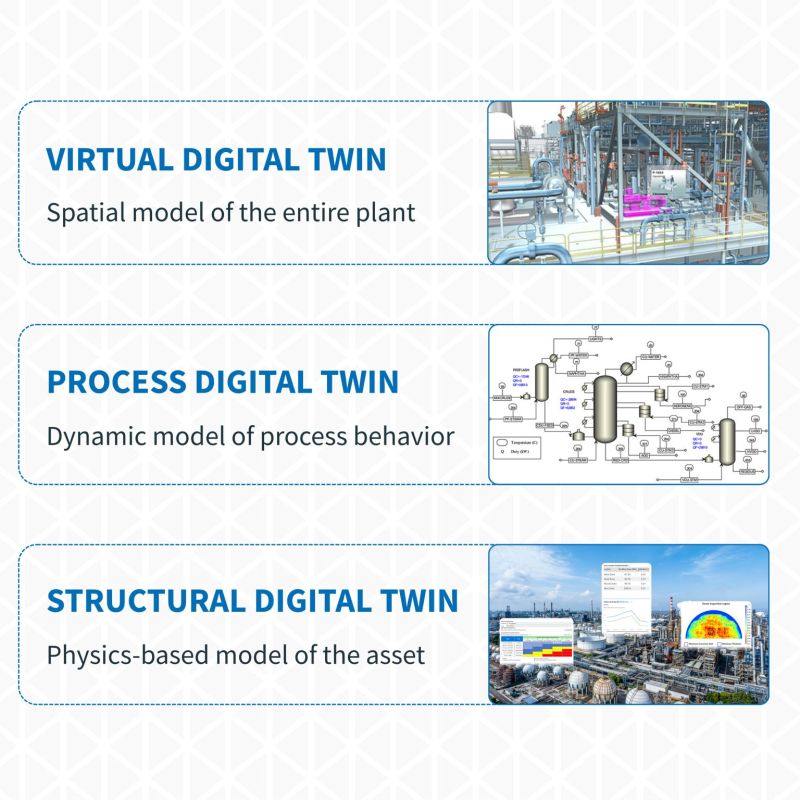
The term digital twin is widely used across industry, but it actually describes several different technologies.
Most companies today rely on a combination of twins to support operations:
- 3D twins to visualize assets and organize operational data
- Process twins to simulate plant behavior and optimize throughput
- Control twins to test automation and control strategies
Each improves operational performance.
But none of them directly answers an important operational question: What is actually happening inside the steel of the asset while it operates?
Structural twins address this gap by modeling how equipment structures behave under real operating conditions. This allows operators to widen operating envelopes, reduce unplanned downtime, and extend asset life.
From Periodic Inspections to Continuous Structural Insight
Traditionally, structural integrity has been managed through periodic inspections and risk-based inspection programs. These methods provide valuable insights — but only at specific moments in time.
A refinery unit, for example, may run for years before an inspection reveals accumulated damage. At that point, engineers can see what happened, but not necessarily how operational conditions created that damage.
Continuous structural insight changes that dynamic. By monitoring structural behavior during operations, companies can identify which operating conditions drive stress and damage. In many cases, only a small fraction of cycles create most of the degradation.
As Claus explains, this approach allows operators to “let the steel speak.”
Explore how industry leaders from Shell and Pan American Energy use Structural Performance Management (SPM) to enhance asset integrity, drive operational excellence, and “let the steel speak” through real-time insights: Supercharge Your Refinery Assets | Webinar
A New Layer of Industrial Intelligence
Another theme discussed at ARC was the role of AI in industrial operations.
AI is extremely powerful for analyzing large volumes of operational data. But when operating multi-billion-dollar industrial assets, physics-based models remain essential.
Structural models provide the engineering foundation for safe decision-making, while AI helps interrogate data, detect anomalies, and automate analysis.
Together, they form a new layer of intelligence that connects operations, optimization, and integrity management.
Watch the Full Conversation
In this interview recorded at the ARC Industry Forum, Claus Reimers discusses:
- Why structural twins fill a critical gap in industrial digitalization
- How AI and physics-based models work together
- Why structural intelligence is becoming essential for aging infrastructure
Watch the full conversation below.
Claus leads the technological vision behind Akselos’ Structural Performance Management platform, bringing together physics-based simulation and artificial intelligence to give operators a real-time understanding of the steel that supports their most critical assets. His work focuses on closing the long-standing gap between process operations and structural integrity, enabling industrial facilities...